⋆。°✩ MARKET LANDSCAPE ✩°。⋆
01
CHATGPT
Where students actually go. Off-platform, no class context, no instructor policy visibility, no academic integrity guardrails.
02
U-M GPT
Hidden in U-M's toolkit. Powerful but disconnected from any specific course. Many students don't know it exists or what it can do.
03
MAIZEY
Maizey supports course-specific AI, but discovery and access still depend on individual course setup and visibility.
Gap: Students don't see AI as part of their class. They see it as something separate they have to find and set up.
02 / PROBLEM
FRAMING
01
"where do I even go?"
02
"is this even allowed?"
03
04
"what does it know about me?"
KEY INSIGHT
03 / IDEATION
CRAZY 8s + TASK FLOW
BEFORE
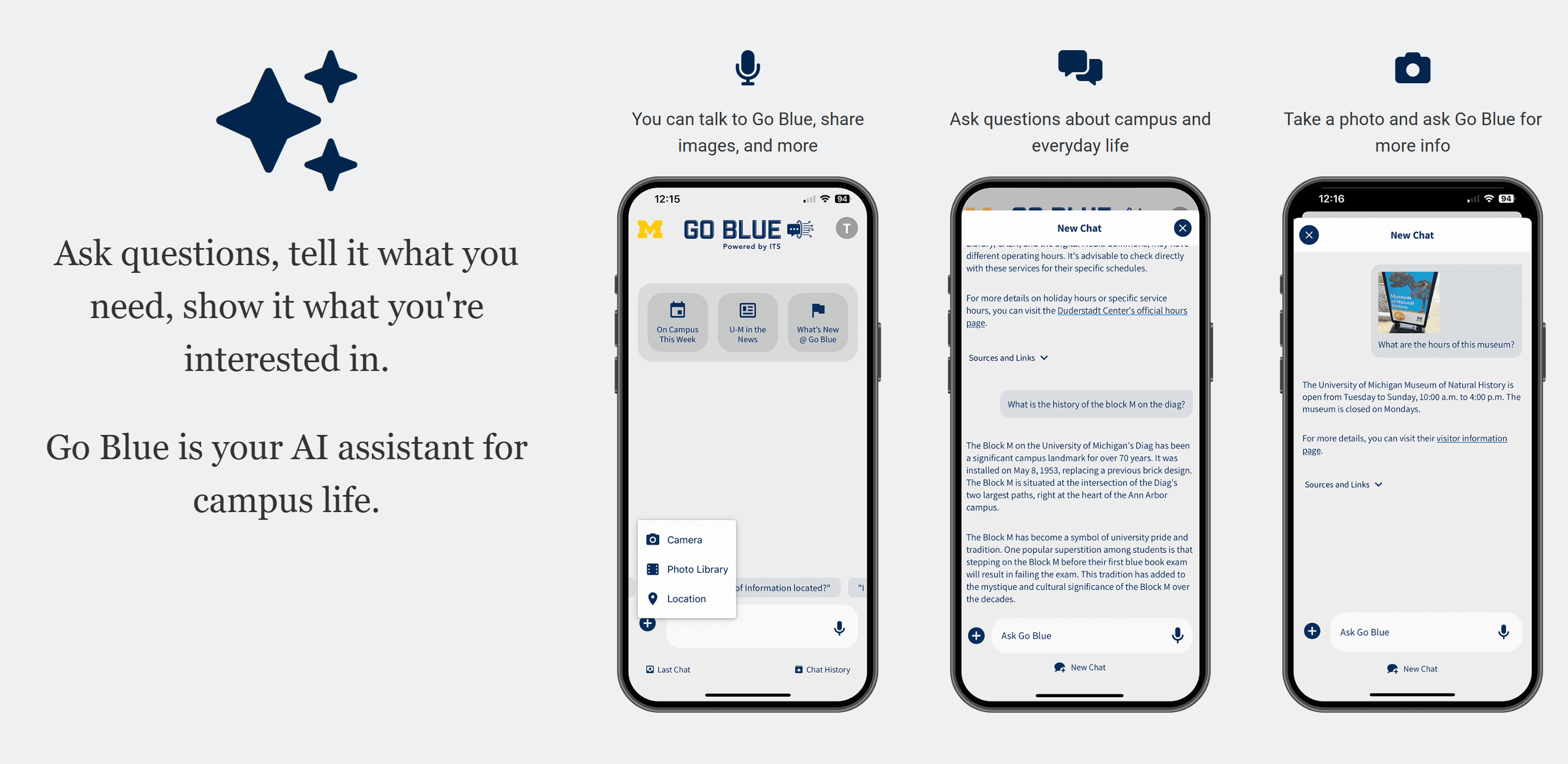
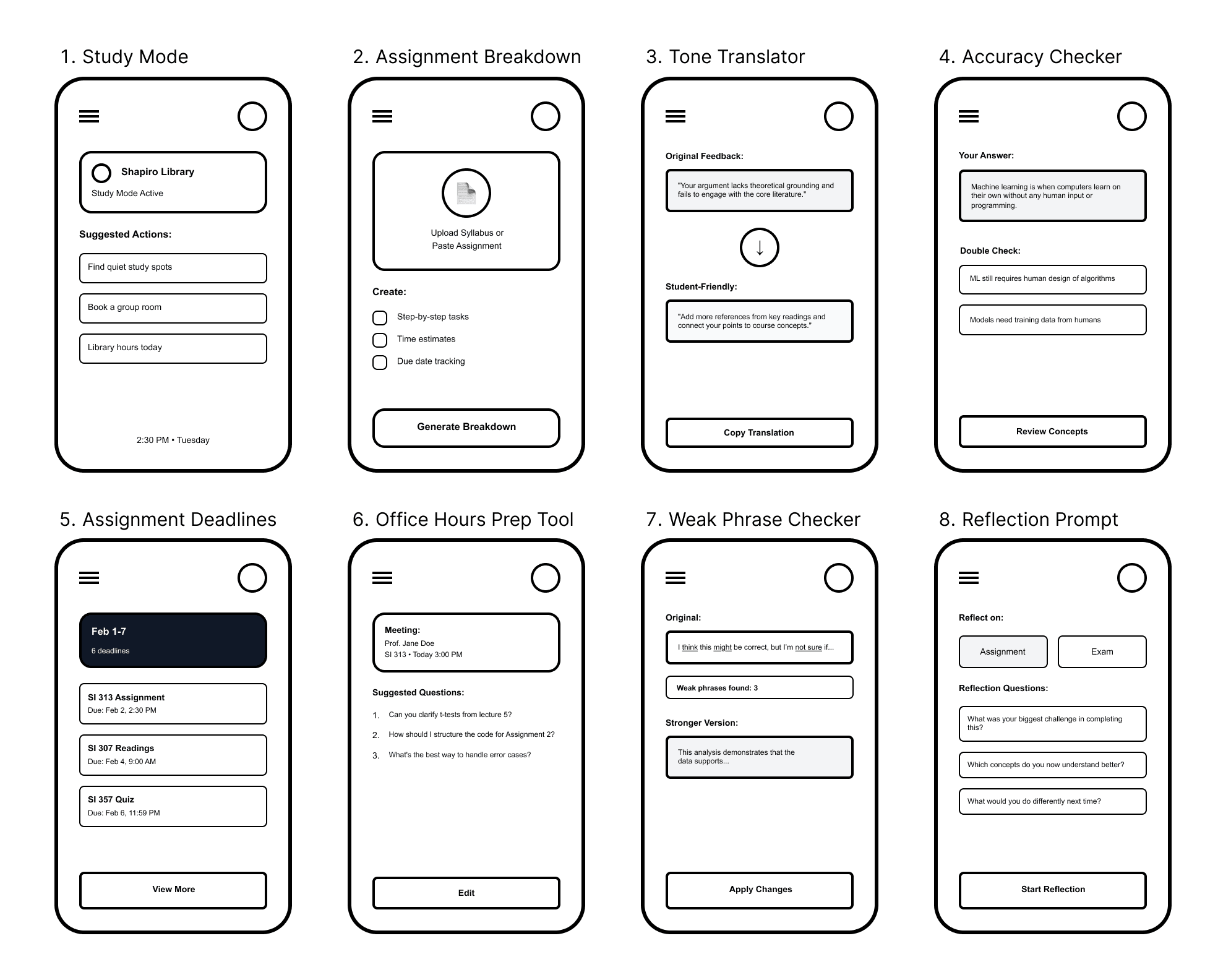
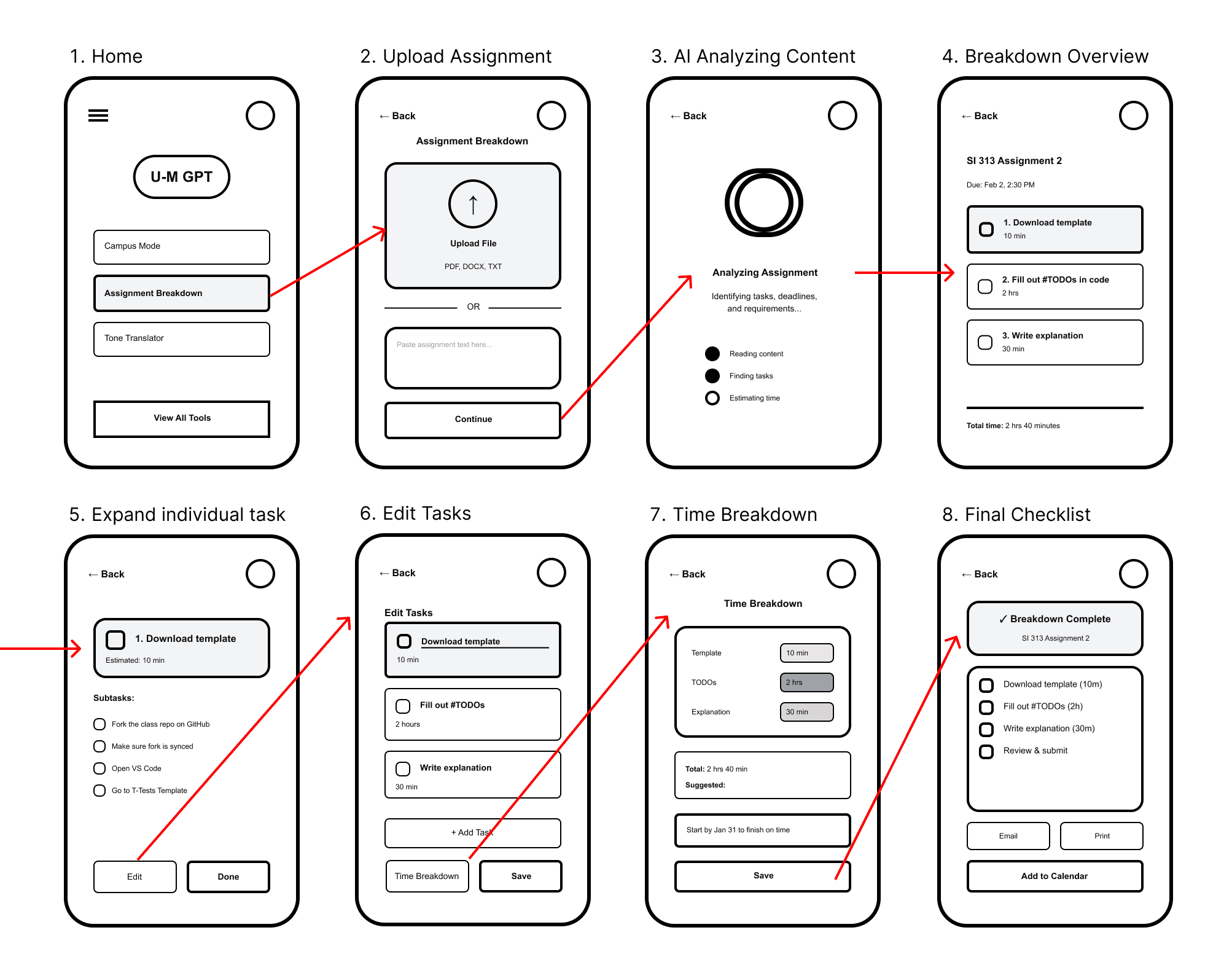
⋆。°✩ LOW FIDELITY WIREFRAME ✩°。⋆
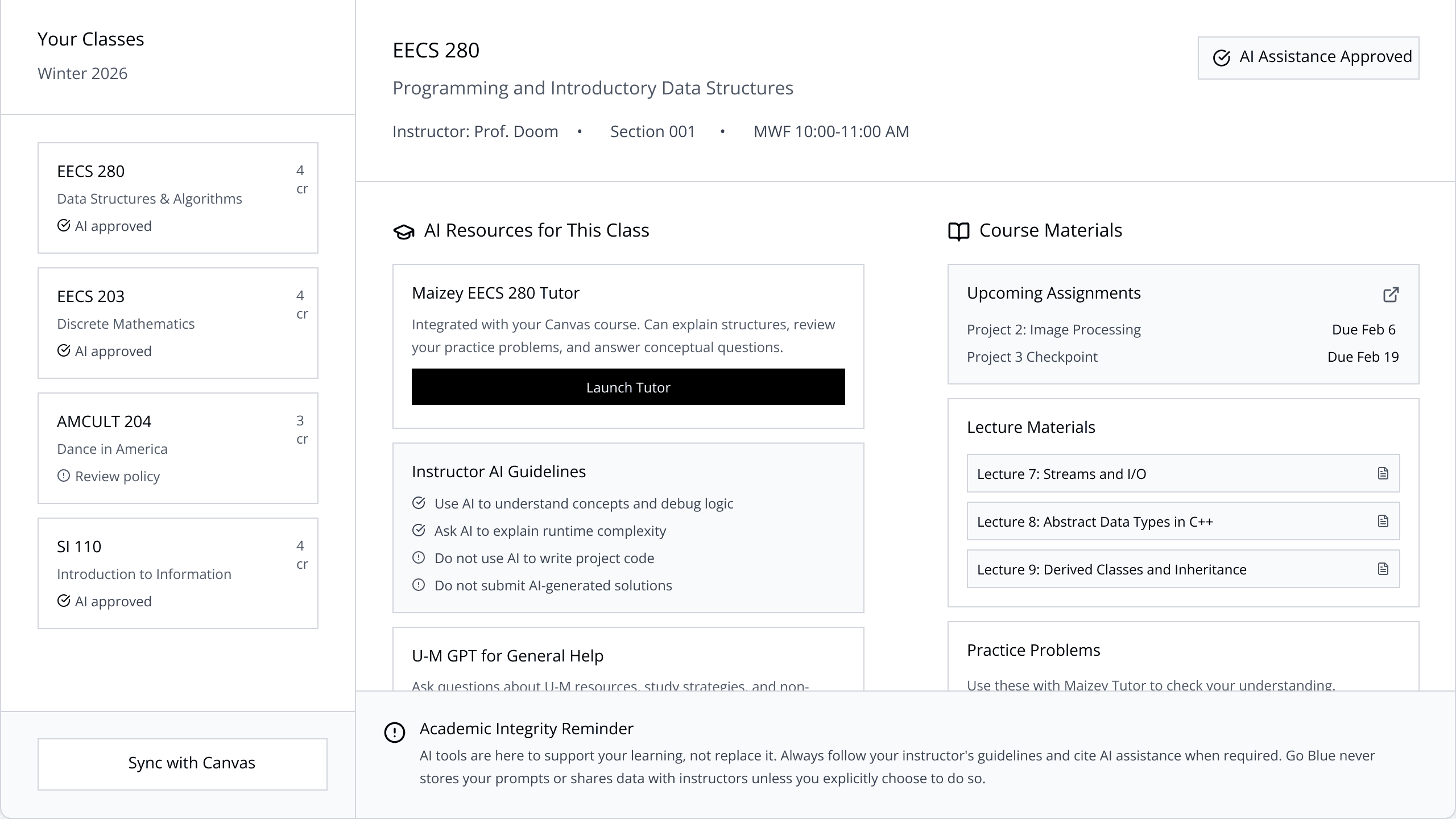
FIRST ITERATION OF HOME PAGE
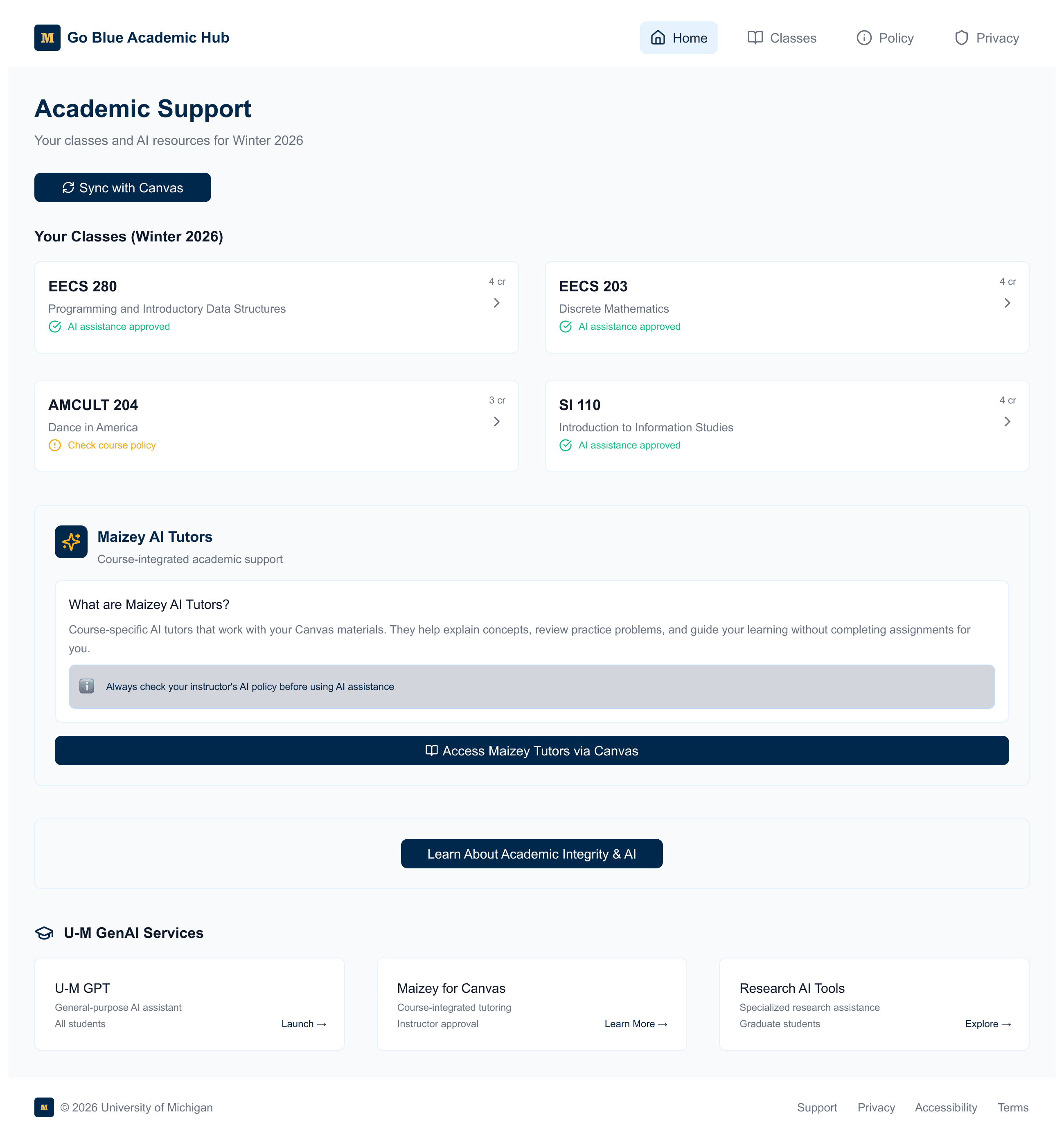
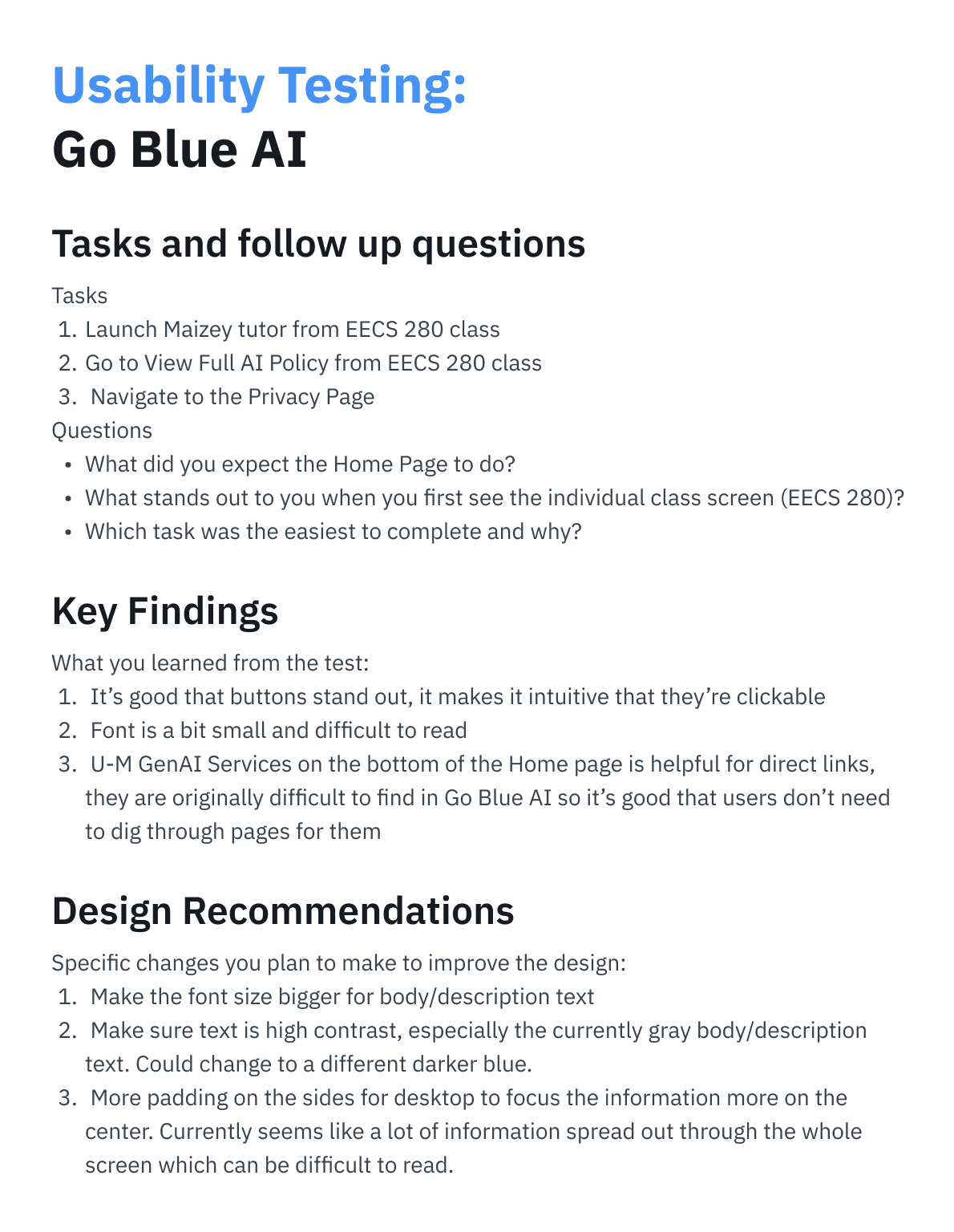
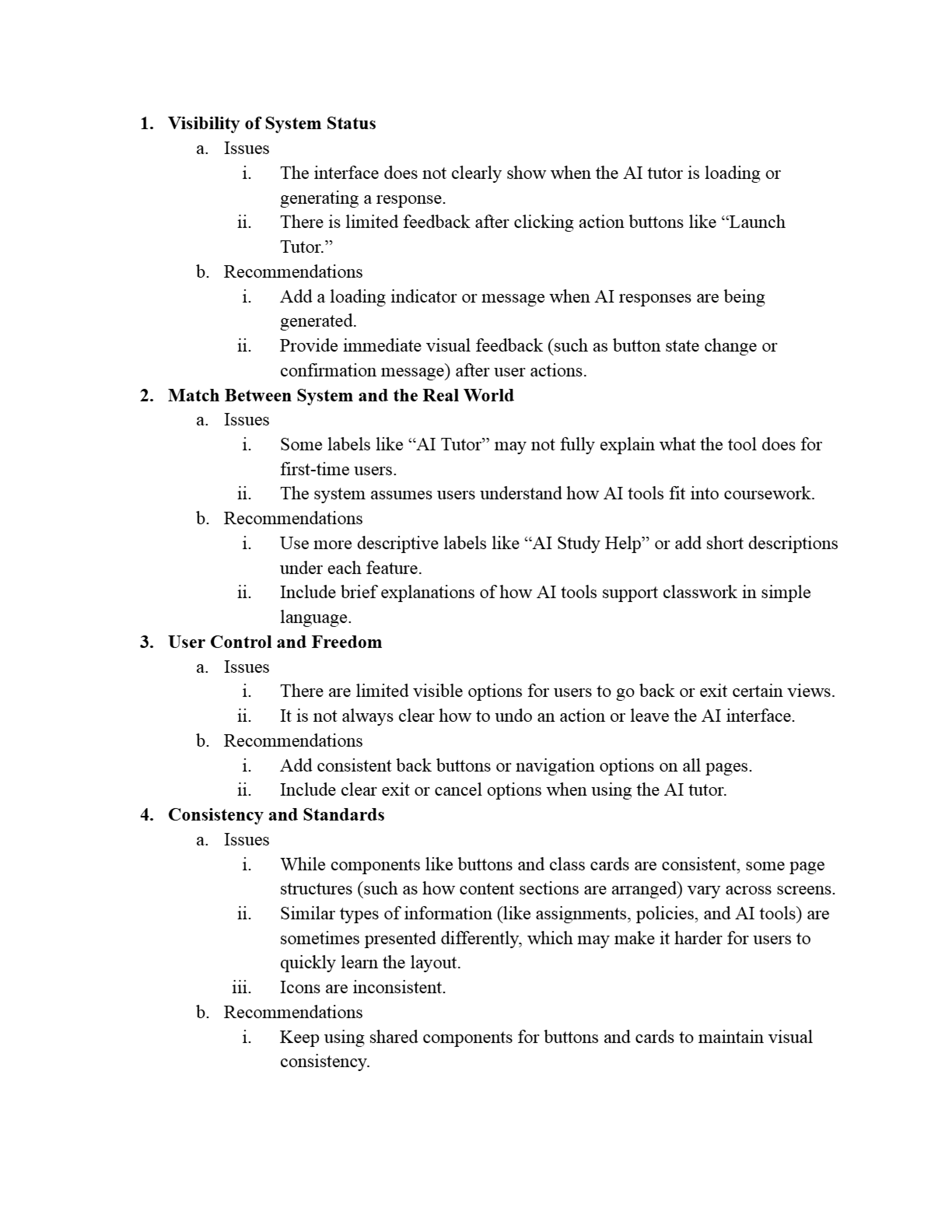
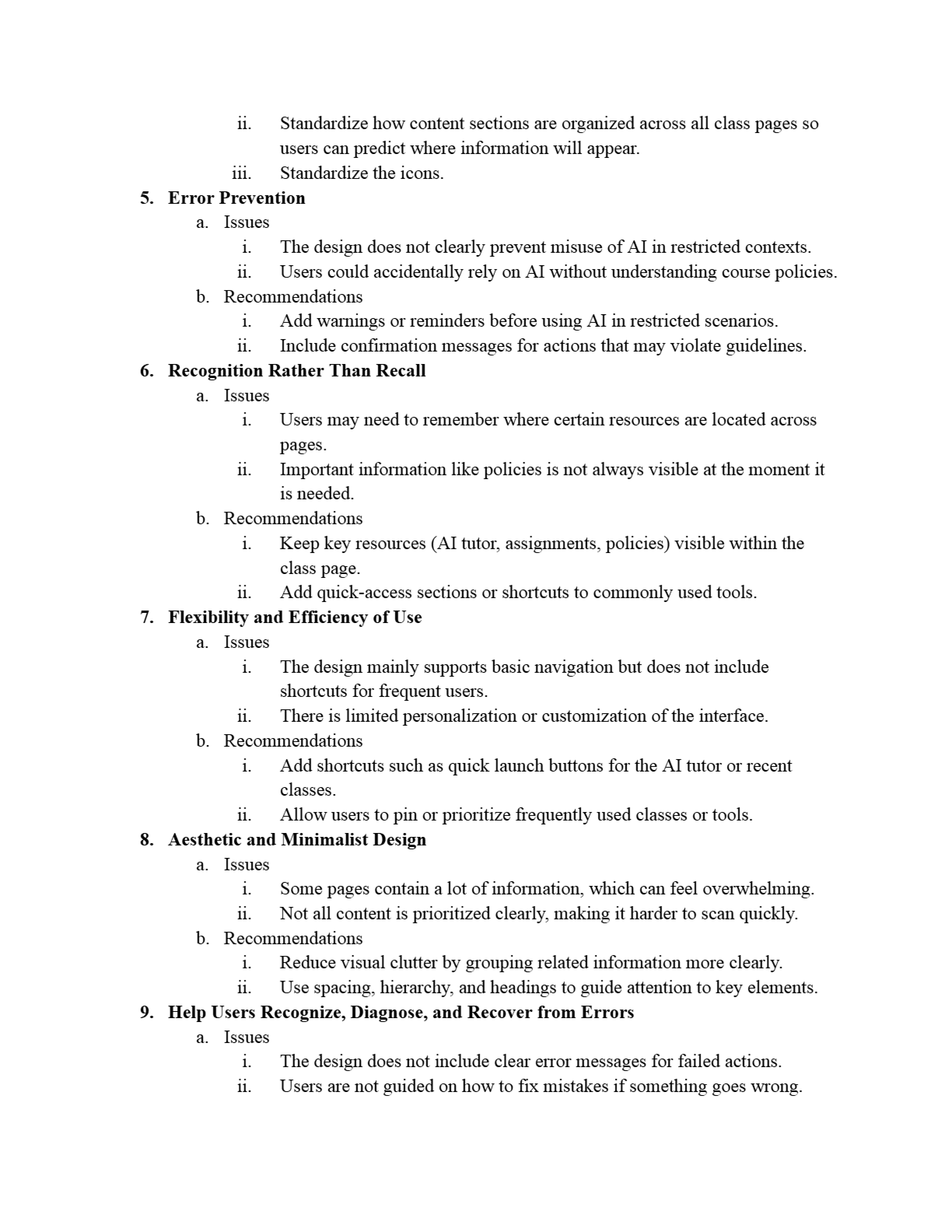
05 / FINAL PRODUCT
DESKTOP + MOBILE
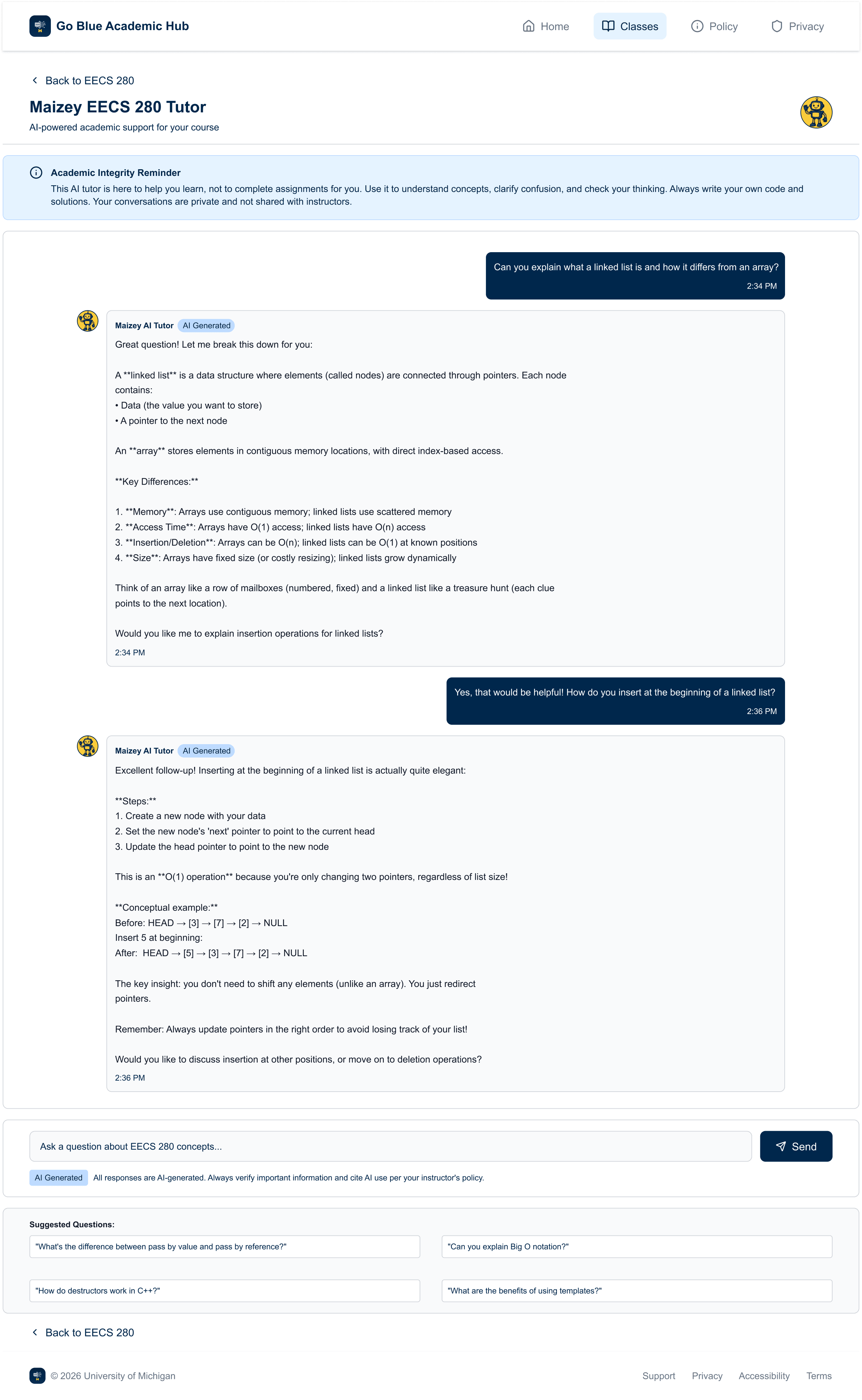
⋆。°✩ AI TUTOR PAGE ✩°。⋆
TRUST BY DESIGN
Specific decisions in the screen above:
✩ ACADEMIC INTEGRITY REMINDER. A blue callout at the top of every session addressing the question students worry about before they even start typing. Is this even allowed?
✩ AI GENERATED TAGS. Every response is labeled so students never lose track of which thinking is theirs and which came from the model.
✩ COURSE-SCOPED TUTOR IDENTITY. The tutor is named after the course instead of being a generic AI, anchoring it inside the class rather than letting it feel like another ChatGPT students have to go find on their own.
✩ SUGGESTED QUESTIONS. Lowering the friction of the first message matters more than it sounds. An empty input box is its own trust barrier.
✩ CITATION REMINDER AT INPUT. A small line below the input field nudges students to cite AI use right when they're using it, not as a checklist item after the fact.
✩ POLICY TAB IN NAV. A dedicated home for course-specific AI rules. Professors set context here. Students check it before they ask.
⋆。°✩ MOBILE PROTOTYPE ✩°。⋆
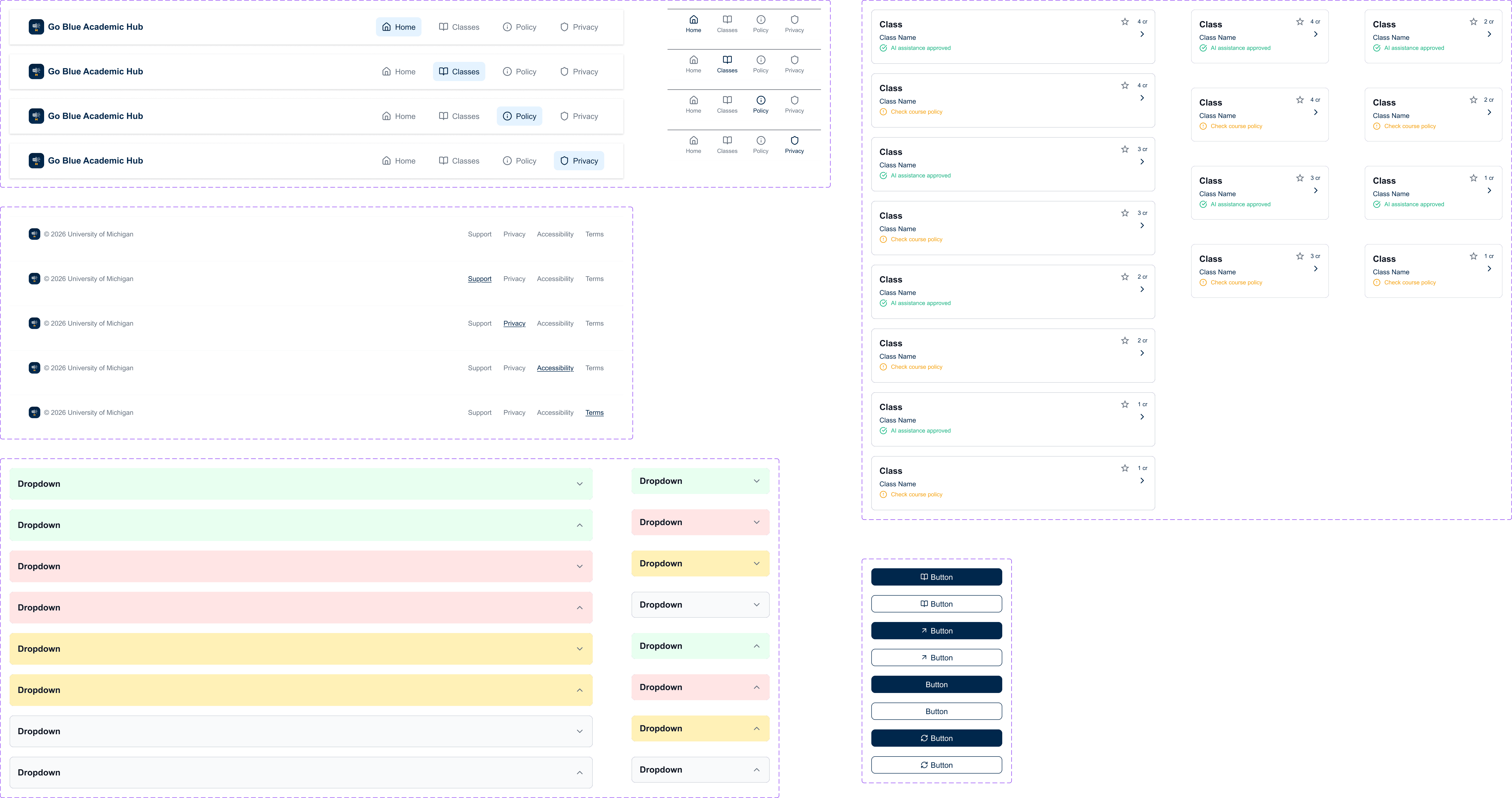
⋆。°✩ COMPONENTS I MADE ✩°。⋆
Buttons, navbars, class cards, dropdowns, and footers were consistently reused throughout this redesign.
06 / KEY DECISIONS
REDESIGN
07 / TAKEAWAYS
ROLE + LEARNINGS
MY ROLE ⋆。°✩
✩ Solo end-to-end: research, ideation, IA, prototyping, visual design
✩ Reframed U-M's open brief around a trust thesis: "How do you design a campus AI students will actually trust?"
✩ Identified four trust gaps from problem framing (Scattered, Unclear, Disconnected, Opaque) and designed surfaces addressing each
✩ Designed AI-specific patterns including academic integrity callouts, course-scoped tutor identity, AI-generated transparency tags, and suggested-question scaffolding
✩ Built desktop + mobile flows + interactive prototype in Figma
WHAT I LEARNED ⋆。°✩
✩ For AI tools, trust is built through transparency, not capability. Every surface I designed (academic integrity reminder, course-scoped tutor identity, AI-generated tags, citation patterns) reinforces this
✩ Final product diverged sharply from initial sketches, and that was the point
✩ Research-driven scope beats feature-driven scope every time
✩ Constraints clarify the product more than features do
✩ Anchoring to existing mental models outperformed other ideas I sketched